


Dynamics 365 Business Central
Dynamics 365 Business Central brings your entire business together into a single system with real-time data, automated workflows, and high productivity. Discover a business system that supports growth and change, provides a better overview, faster decisions, and more time for value-creating work.

Economic impact driven by Business Central
265%
Return on investment (3 years)
6 months
Return on investment
±12.5%
Increased efficiency for finance & operations
Best ERP of 2025 according to Forbes
Dynamics 365 Business Central brings your entire business together in one system for a better overview, faster decisions, and increased productivity.
Used by over 40,000 companies
Business Central is optimized for small and medium-sized businesses in all industries. Its widespread adoption is largely due to the system being both scalable and flexible, allowing it to be easily adapted to changing market conditions, unique needs, and ways of working.
Consolidate data and make better decisions
Microsoft Business Central brings finance, sales, inventory, and projects together in a central database, eliminating silos and providing real-time insights. Management gains a unified overview via dashboards and reports, making decisions faster, more reliable, and more data-driven.
Automate workflows and increase efficiency
Business Central reduces manual work by automating order flows, invoicing, approvals, and reporting. Information moves seamlessly between departments, eliminating duplicate work, reducing errors, and increasing productivity—allowing the organization to do more with the same resources.
Built to grow with your company
Dynamics 365 Business Central is scalable and flexible, supporting more users, new business models, and international expansion without the need for new infrastructure. Modules and features can be activated as needed, ensuring the system grows with your business and remains future-proof.
Get smarter with real-time data and AI
Business Central provides real-time reports, dashboards, and AI-driven forecasts directly within the system. With features such as cash flow forecasting, late payment warnings, and seamless Power BI integration, management gains faster, more reliable, and data-driven decision support.
Strengthened digitalization and competitiveness
Business Central places the business on a modern cloud platform that is updated continuously, supports new digital tools, and integrates easily with e-commerce and CRM. This makes the company more agile, future-proof, and better equipped to stay ahead of the competition.

Is Business Central right for you?
We help you quickly determine if the solution is a match for your business — and what concrete results it can actually deliver for you.
We explain...
What is Dynamics 365 Business Central?
It is an AI-based business management system (ERP) for small and medium-sized businesses – used by 45,000 companies around the world.
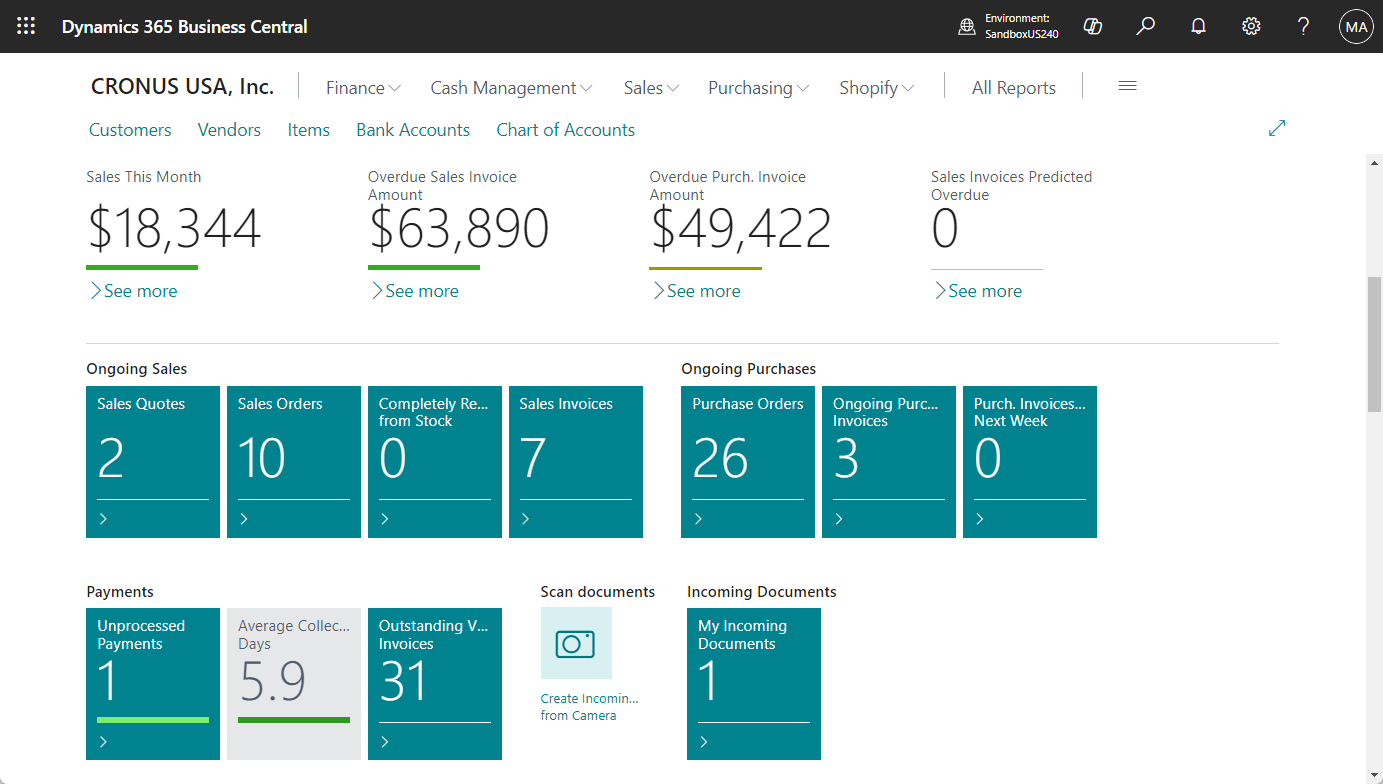
Holistic Perspective & Decision Support
Gain real-time financial insights, key performance indicators, and forecasts that support strategic decisions. The integration of all departments (finance, sales, operations, etc.) in Business Central provides a "single source of truth" for business data—facilitating the tracking of profitability, cash flow, and operational efficiency.
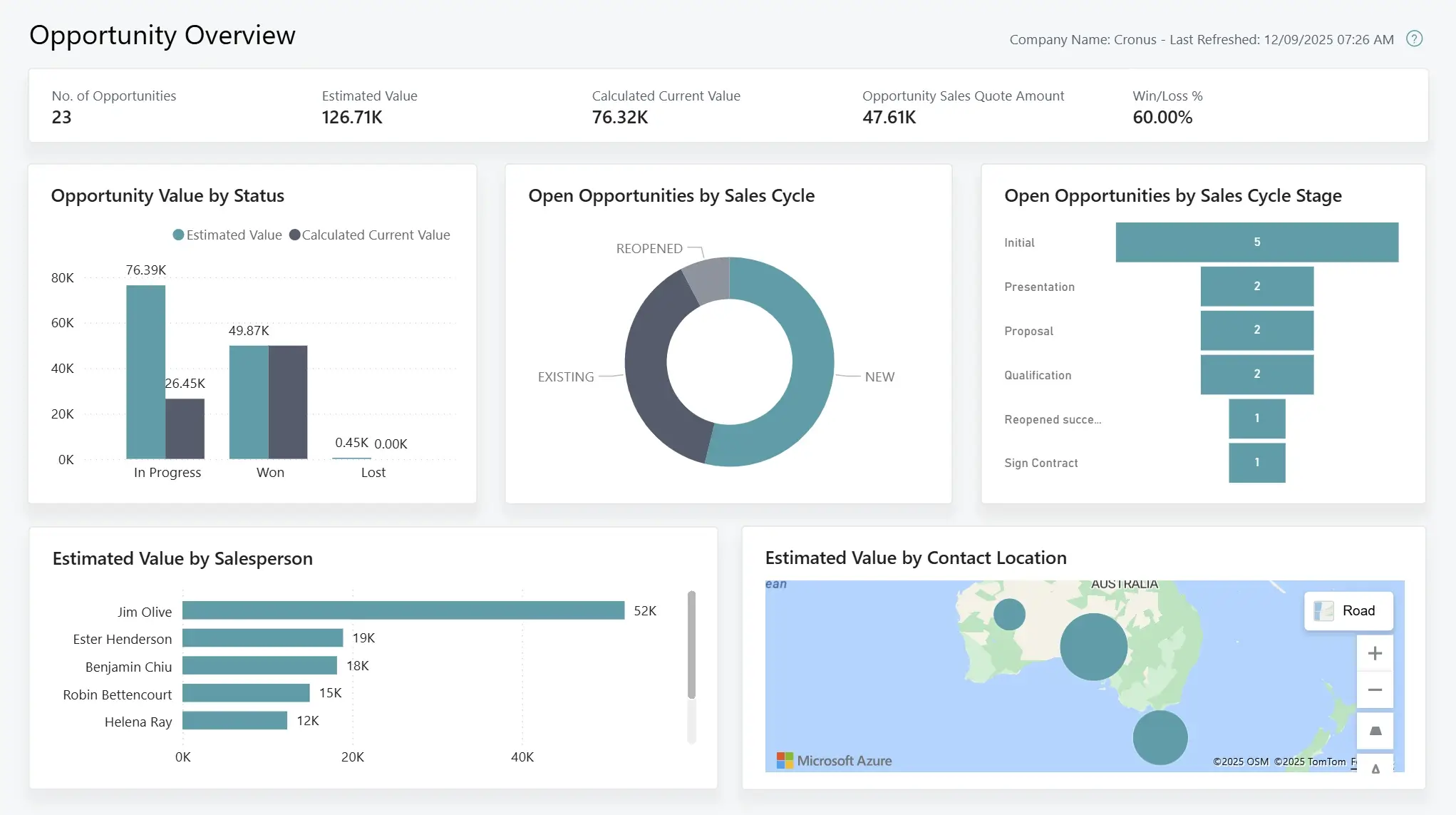
Sales & Marketing
The module supports the entire sales workflow: customer management, quote creation, orders, invoicing, and basic marketing tasks. You can register contacts, leads, and business opportunities, as well as track pipelines and history. Quotes can be quickly converted into orders and invoices, with support for flexible pricing and discounts. The system displays stock balances and delivery times directly during order entry, reserves inventory, and facilitates campaigns and customer segmentation. Business Central also has a standard connector to Shopify for e-commerce.

Supply Chain
The planning function optimizes the balance between supply and demand. With the MRP engine, Business Central automatically creates purchase and production proposals based on inventory levels, forecasts, and open orders. Users can set reorder points, safety stock, and lead times per item. The forecasting tool supports manual sales forecasts, and AI-based forecasts can suggest levels based on historical trends and warn of shortages. The function also handles order promising by checking future availability and supports various planning methods to avoid both shortages and overstocking.
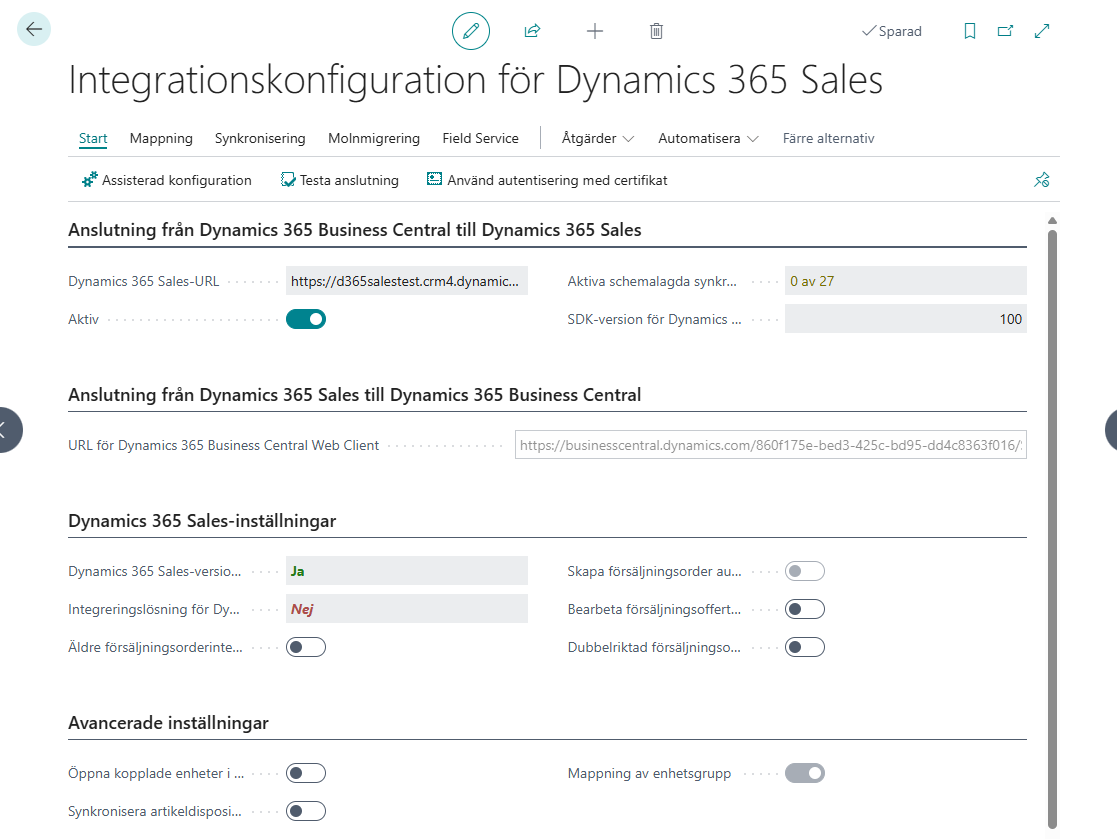
Operational Reliability & Integration
Get a system that is secure, stable, and easy to manage. Business Central's cloud platform on Azure provides built-in role-based security, data encryption, and two-factor authentication. Automatic updates reduce the maintenance burden. Seamless integration with other systems (Microsoft 365, Azure AD, third-party APIs) simplifies the overall architecture.

Purchasing & Accounts Payable
The module covers the entire purchasing workflow: vendor registers, purchase orders, goods receipt, and invoice processing. Users can compare vendors, create requests, and work with price lists. When goods are received, inventory is updated automatically and the liability is recorded. The system supports invoice approval, returns for incorrect deliveries, and generates payments based on due dates, including cash discounts. The purchasing process is integrated with finance for automated bookkeeping and with inventory management for accurate stock levels.
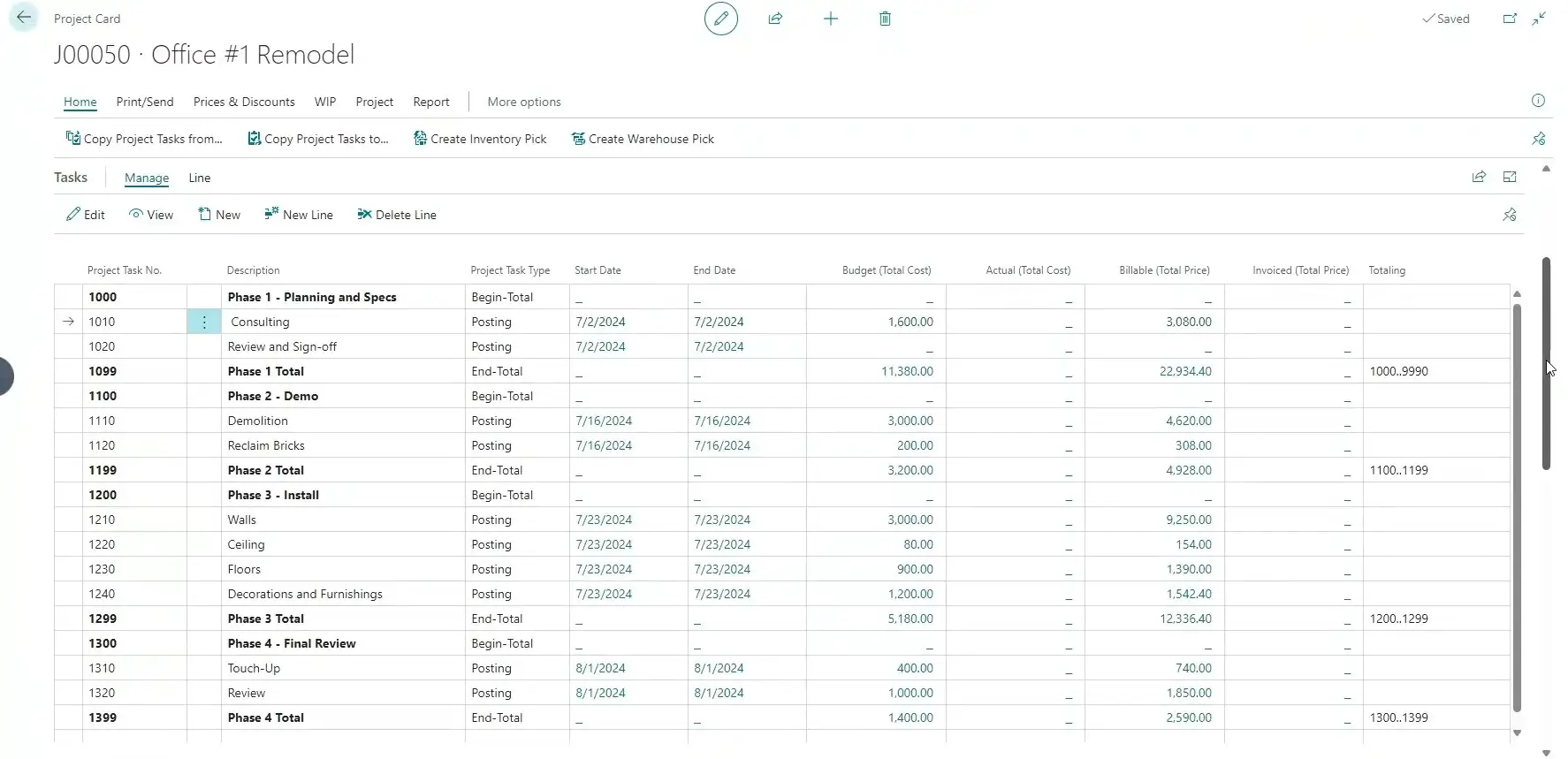
Project Management
The module is used to plan and follow up on projects and assignments, especially for service and contracting companies that need to track revenue and costs per project. You create projects with sub-projects and activities, and can set budgets per activity. Time sheets and purchases are registered against the project—manually or via integrated time-tracking tools—so that costs are continuously compared against the budget. The system handles WIP and makes invoicing simple, both for hours worked and fixed amounts according to plan. Resources such as staff or machinery can be scheduled to monitor capacity utilization. Reporting gives project managers and management clear insight into profitability, progress, and outcomes.
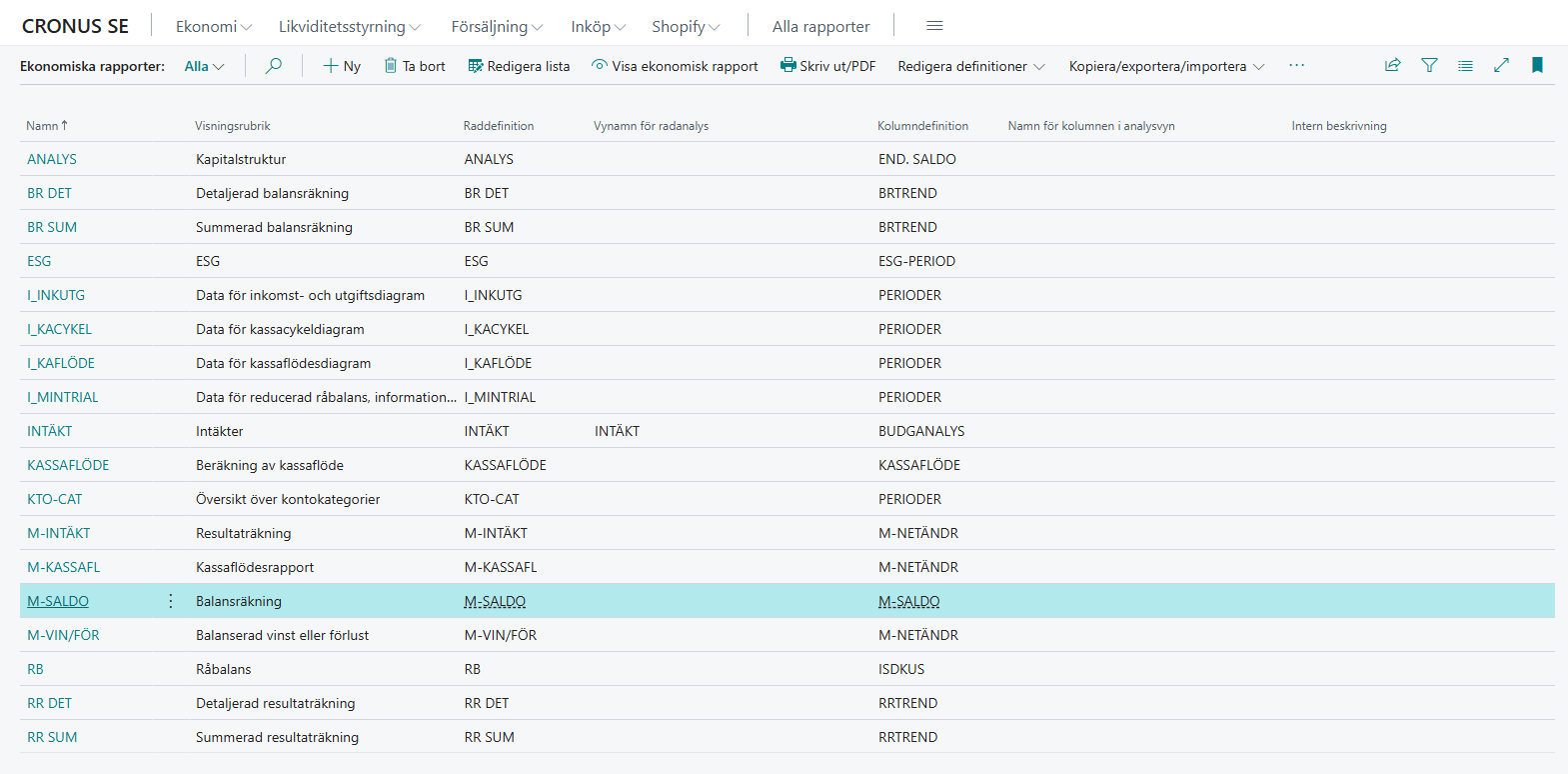
Financial Management
The module covers all financial accounting and management: bookkeeping, accounts receivable and payable, payments, liquidity, and reporting. Business Central supports the general ledger, invoice processing, and bank reconciliation, as well as multi-currency management and group consolidation. The system also offers budgeting, forecasting, and financial reports that provide real-time insight into profit and loss and the balance sheet.
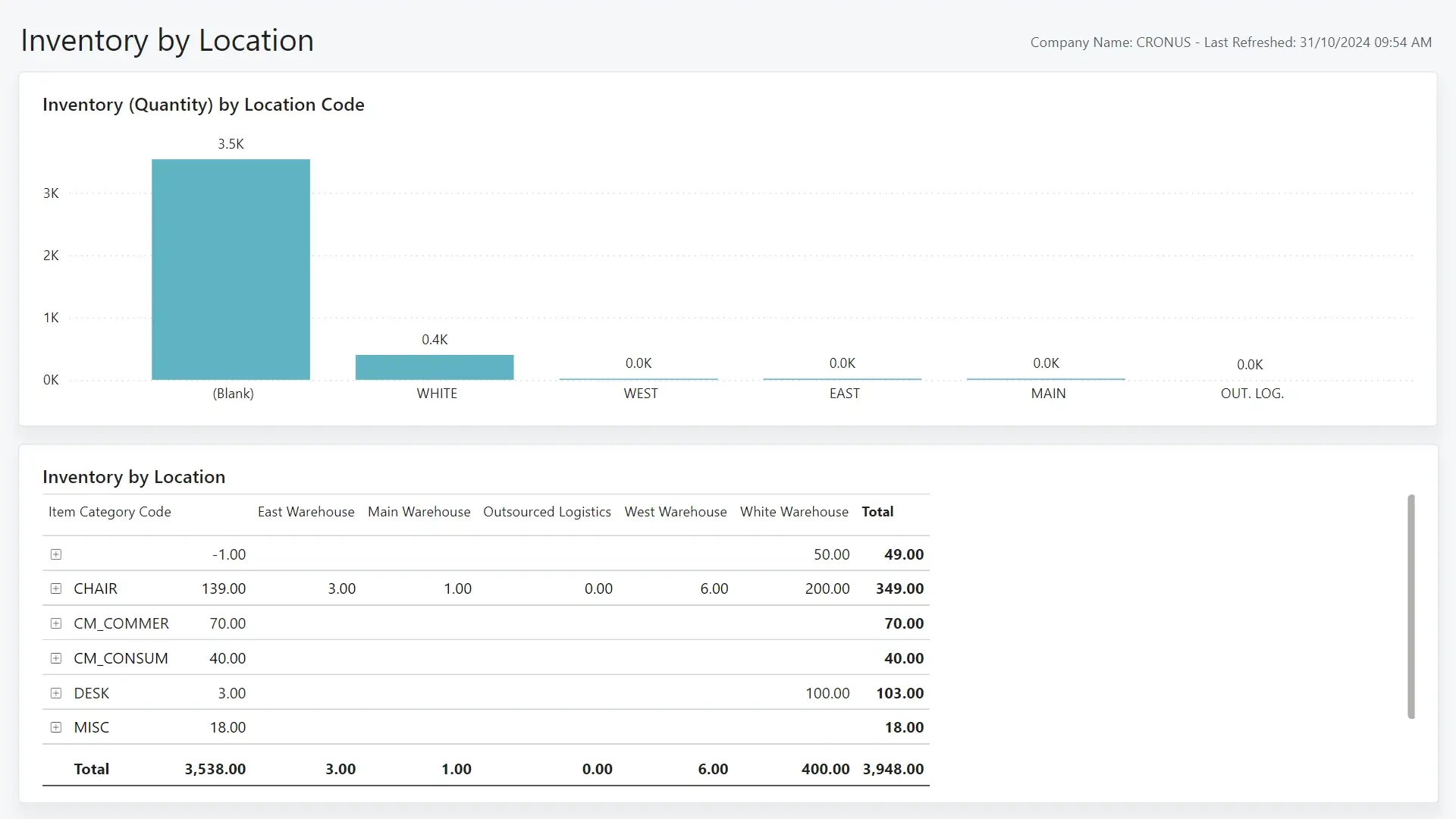
Inventory Management
The inventory function provides full control over stock levels, valuation, and movements. Items are defined with attributes such as dimensions, costs, prices, and product groups, and the system supports multiple costing methods like FIFO and weighted averages. With item tracking, you can manage serial and lot numbers as well as expiration dates. The module supports multiple locations and transfers between them, as well as physical and cycle counting for accurate balances. All inventory movements are posted automatically so that the inventory value always matches the physical stock.
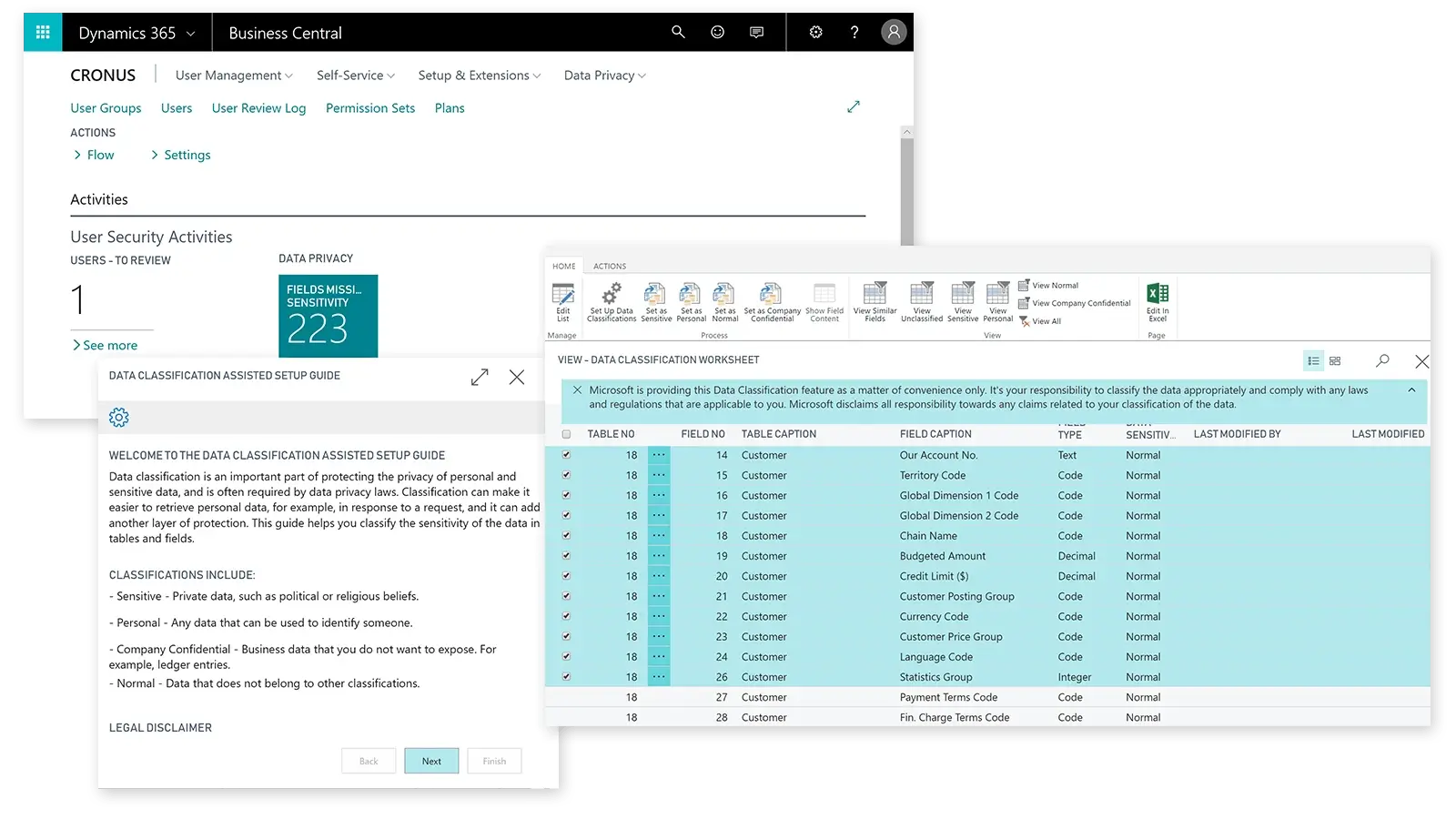
Inventory & Logistics
The module supports more advanced inventory and logistics flows for companies with larger warehouses or zone-based management. You can define warehouse layouts with zones and picking locations, control picking and replenishment flows, and use warehouse orders for picking and put-away. Inbound and outbound deliveries are handled via separate documents that ensure accurate inventory movements. There is support for barcodes and mobile devices via an app to reduce errors. Workflows for stocktaking and internal transfers can be customized, and the system can suggest optimal picking routes or placement of incoming goods. The module is activated as needed and complements the basic inventory functionality.

How Business Central solves common IT challenges
An ERP transition usually begins when existing systems have become unsustainable to manage—typically, there is a collection of older systems that require constant firefighting, complex integrations, security risks, and high maintenance costs. Business Central, a Software-as-a-Service solution on the Microsoft Azure cloud, is designed to solve exactly these pain points and significantly simplify the IT landscape:
Replaces older, separate systems
Stop maintaining a patchwork of applications and custom-written integrations—much of the functionality is built-in or can be added as configurable modules in Business Central.
Automatically kept up to date
Updates are handled automatically by Microsoft, resulting in a cleaner system environment, fewer moving parts, and a technical platform that is kept constantly "young" through Microsoft's updates.
Simpler integrations
The company's core processes are contained within a single system, eliminating many of the integrations that IT previously had to maintain. For the integrations that are still needed, there are open interfaces and support for Microsoft Dataverse.
High operational reliability in the cloud
Business Central runs on Azure and provides stable operations. Redundancy, automatic monitoring, and ongoing backups are handled by Microsoft, resulting in high uptime and fewer outages compared to traditional on-premise solutions.
Built-in security
Because the system is built on the Azure security platform, which is backed by Microsoft's extensive security work and certifications, the company receives enterprise-level protection without needing its own infrastructure.
Smarter resource utilization
The system runs in the cloud, which means the company avoids servers, maintenance, and expensive upgrades. The subscription model provides lower and more predictable costs, fewer integrations, and less custom code.

Would you like to see a demo or do you have any questions?
Send us an inquiry and we will get back to you as soon as possible.
Frequently asked questions
Can Business Central be integrated with other systems?
How is reporting and analysis handled in Business Central?
How long does it take to implement Business Central?
How much does Dynamics 365 Business Central cost?
Is Business Central an ERP or a CRM?
What is Microsoft Business Central?
What is the difference between Business Central and the older Navision?
What licenses are available for Business Central?
Which companies use Business Central?
Which industries is Business Central best suited for?
More services